

Different Grades of Stainless Steel Pipes Fittings

erametssteel.
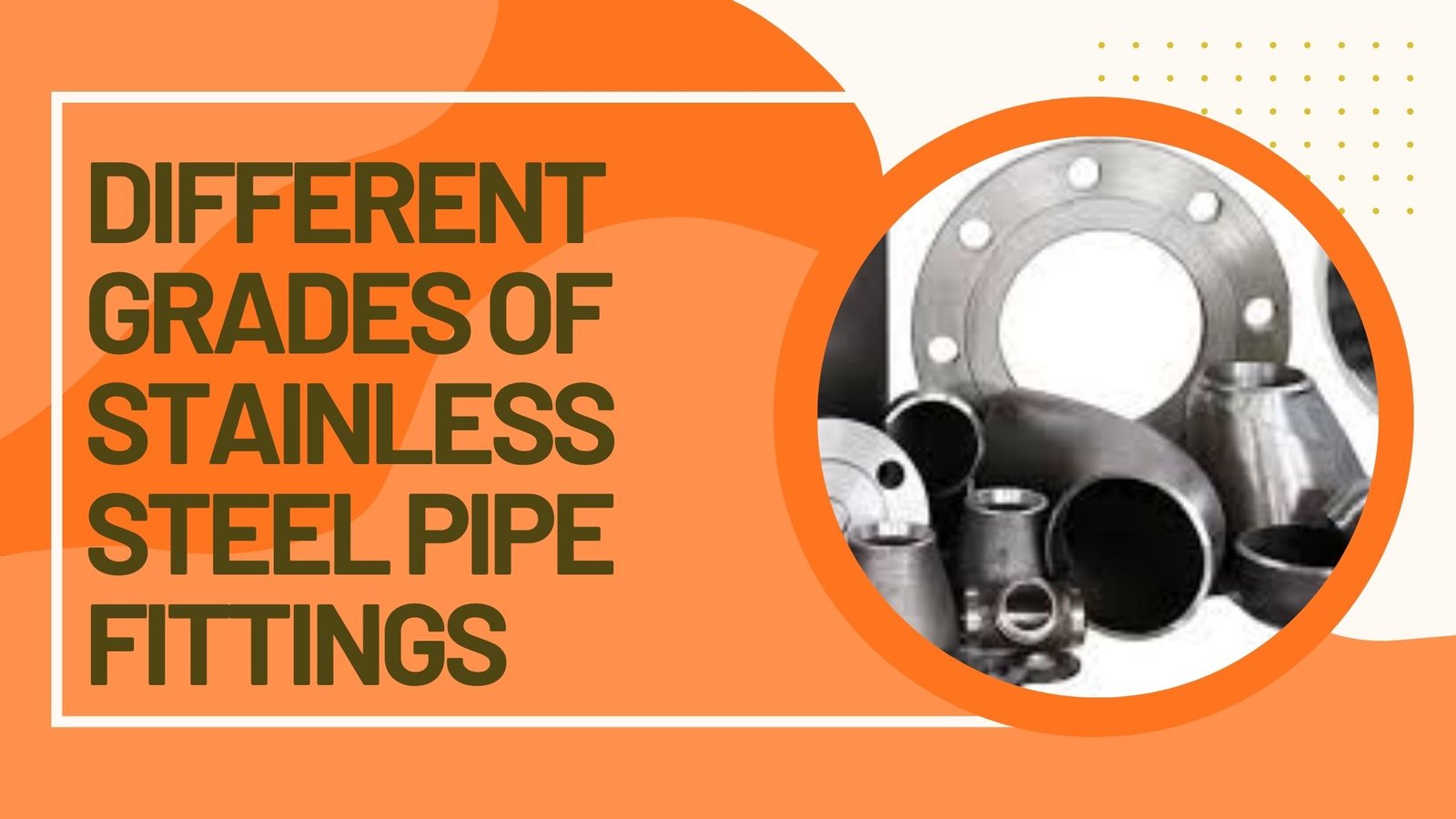
Stainless steel pipe fittings are one of the most critical components used in modern industrial piping systems. These fittings play an essential role in connecting pipes, changing flow direction, reducing pipe size, and controlling fluid or gas movement in pipelines. Due to their excellent corrosion resistance, durability, strength, and long service life, stainless steel pipe fittings are widely used across industries such as oil & gas, petrochemical, chemical processing, power plants, pharmaceuticals, marine engineering, and food processing.
However, not all stainless steel pipe fittings are the same. They are available in different grades, each designed to perform under specific environmental, chemical, and mechanical conditions. Understanding these grades is essential for selecting the right fitting for your application and ensuring long-term system reliability.
What Are Stainless Steel Pipe Fittings?
Stainless steel pipe fittings are components used in piping systems to:
- Connect two or more pipes
- Change the direction of flow
- Reduce or increase pipe diameter
- Seal pipe ends
- Control and regulate flow
These fittings are manufactured in various shapes and sizes and are made using different stainless steel grades depending on the application.
Why Stainless Steel is Preferred for Pipe Fittings
Stainless steel is one of the most widely used materials in piping systems because of its:
- Excellent corrosion resistance
- High strength and durability
- Resistance to high temperature and pressure
- Low maintenance requirements
- Long service life
- Hygienic and non-reactive nature
This makes it ideal for industries where safety and performance are critical.
Classification of Stainless Steel Grades
Stainless steel is broadly classified into the following types:
1. Austenitic Stainless Steel (300 Series)
2. Ferritic Stainless Steel (400 Series)
3. Martensitic Stainless Steel
4. Duplex Stainless Steel
Each type has unique properties and is used in different industrial applications.
1. Austenitic Stainless Steel Pipe Fittings
Austenitic stainless steels are the most commonly used grades for pipe fittings. They contain high amounts of chromium and nickel, which provide excellent corrosion resistance and toughness.
Key Characteristics:
- Non-magnetic (in annealed condition)
- Excellent corrosion resistance
- High ductility and weldability
- Suitable for cryogenic and high-temperature applications
SS 304 Pipe Fittings (UNS S30400)
SS 304 pipe fittings are the most widely used stainless steel fittings in the world.
Chemical Composition:
- Chromium: 18–20%
- Nickel: 8–10.5%
- Carbon: ≤0.08%
Key Properties:
- Excellent corrosion resistance in mild environments
- Good mechanical strength
- Excellent weldability and formability
- Resistant to oxidation
Applications:
- Food processing industry
- Dairy and beverage systems
- Water pipelines
- Architectural and structural applications
- General industrial piping
SS 304L Pipe Fittings (Low Carbon Grade)
SS 304L pipe fittings contain low carbon (≤0.03%), which improves weldability.
Advantages:
- Prevents carbide precipitation
- Better corrosion resistance after welding
- Ideal for welded structures
Applications:
- Chemical processing plants
- Pressure vessels
- Storage tanks
- Welded piping systems
SS 316 Pipe Fittings (Marine Grade Stainless Steel)
SS 316 pipe fittings are enhanced with molybdenum, making them suitable for harsh environments.
Chemical Composition:
- Chromium: 16–18%
- Nickel: 10–14%
- Molybdenum: 2–3%
Key Advantages:
- High resistance to pitting and crevice corrosion
- Excellent performance in chloride-rich environments
- Superior corrosion resistance compared to SS 304
Applications:
- Marine and offshore industries
- Chemical and petrochemical industries
- Pharmaceutical equipment
- Oil and gas pipelines
- Desalination plants
SS 316L Pipe Fittings
SS 316L pipe fittings are low-carbon versions of SS 316.
Benefits:
- Improved weldability
- Reduced sensitization
- High resistance to corrosion in welded areas
Applications:
- Food and pharmaceutical industries
- Medical equipment
- High-purity water systems
- Chemical processing
SS 321 Pipe Fittings (Titanium Stabilized Grade)
SS 321 pipe fittings contain titanium, which stabilizes the alloy and prevents carbide formation.
Advantages:
- Excellent resistance to high temperatures
- Suitable for thermal cycling applications
- Prevents intergranular corrosion
Applications:
- Aerospace industry
- Heat exchangers
- Boilers
- Furnace equipment
2. Ferritic Stainless Steel Pipe Fittings
Ferritic stainless steels contain high chromium and low nickel.
SS 430 Pipe Fittings
Key Features:
- Magnetic
- Moderate corrosion resistance
- Good oxidation resistance
- Lower cost compared to austenitic grades
Applications:
- Automotive exhaust systems
- Decorative applications
- Indoor structural applications
3. Martensitic Stainless Steel Pipe Fittings
Martensitic stainless steels are known for high hardness and strength.
SS 410 Pipe Fittings
Key Properties:
- Heat treatable
- High wear resistance
- Moderate corrosion resistance
Applications:
- Pumps and valves
- Turbine components
- Mechanical engineering parts
- Cutlery and tools
4. Duplex Stainless Steel Pipe Fittings
Duplex stainless steels combine both austenitic and ferritic structures, offering a balance of strength and corrosion resistance.
Duplex 2205 Pipe Fittings (UNS S32205)
Key Features:
- High tensile strength (almost double SS 304)
- Excellent resistance to stress corrosion cracking
- Superior pitting resistance
- High PREN value (Pitting Resistance Equivalent Number)
Applications:
- Offshore oil rigs
- Chemical processing plants
- Marine environments
- High-pressure pipelines
- Desalination plants
Chemical Composition and Its Role
The performance of stainless steel pipe fittings depends heavily on its chemical composition:
- Chromium (Cr): Provides corrosion resistance
- Nickel (Ni): Improves toughness and flexibility
- Molybdenum (Mo): Enhances resistance to pitting corrosion
- Carbon (C): Adds strength but may reduce corrosion resistance
- Titanium (Ti): Prevents carbide formation
Mechanical Properties of Stainless Steel Pipe Fittings
Key mechanical properties include:
- Tensile strength
- Yield strength
- Hardness
- Elongation
- Impact resistance
These properties determine how well fittings perform under high pressure, load, and temperature conditions.
Types of Stainless Steel Pipe Fittings
Common types include:
- Elbows (45°, 90°, 180°)
- Tees (equal and reducing)
- Reducers (concentric & eccentric)
- Couplings
- Caps
- Cross fittings
- Flanges
Manufacturing Process
The manufacturing of stainless steel pipe fittings involves:
- Raw material selection
- Heating and forging
- Machining
- Heat treatment
- Surface finishing
- Inspection and testing
Surface treatments like pickling and passivation enhance corrosion resistance.
Testing and Quality Standards
To ensure safety and performance, fittings are tested using:
- Hydrostatic testing
- Ultrasonic testing
- Radiographic testing
- Chemical analysis
- Mechanical testing
Standards followed include:
- ASTM A403
- ASME B16.9
- ASME B16.11
Applications of Stainless Steel Pipe Fittings
Stainless steel pipe fittings are used in:
- Oil & gas industry
- Petrochemical plants
- Chemical processing
- Food & beverage industry
- Pharmaceutical industry
- Power plants
- Water treatment systems
- Marine applications
Advantages of Stainless Steel Pipe Fittings
- Excellent corrosion resistance
- High strength and durability
- Long lifespan
- Low maintenance cost
- Suitable for extreme environments
- Hygienic and safe
How to Select the Right Grade
When selecting stainless steel pipe fittings, consider:
- Temperature conditions
- Pressure requirements
- Type of fluid or gas
- Corrosive environment
- Welding requirements
- Budget constraints
Conclusion
Different grades of stainless steel pipe fittings offer a wide range of benefits depending on the application. From SS 304 for general use to SS 316 for marine environments and Duplex 2205 for high-strength applications, each grade serves a unique purpose.
Understanding the chemical composition, mechanical properties, standards, and applications helps in selecting the right stainless steel pipe fittings for industrial use. With proper selection, these fittings ensure long-term performance, safety, and efficiency in any piping system.