

Types of Flanges: A Complete Guide to Industrial Pipe Flanges

Eramets Team
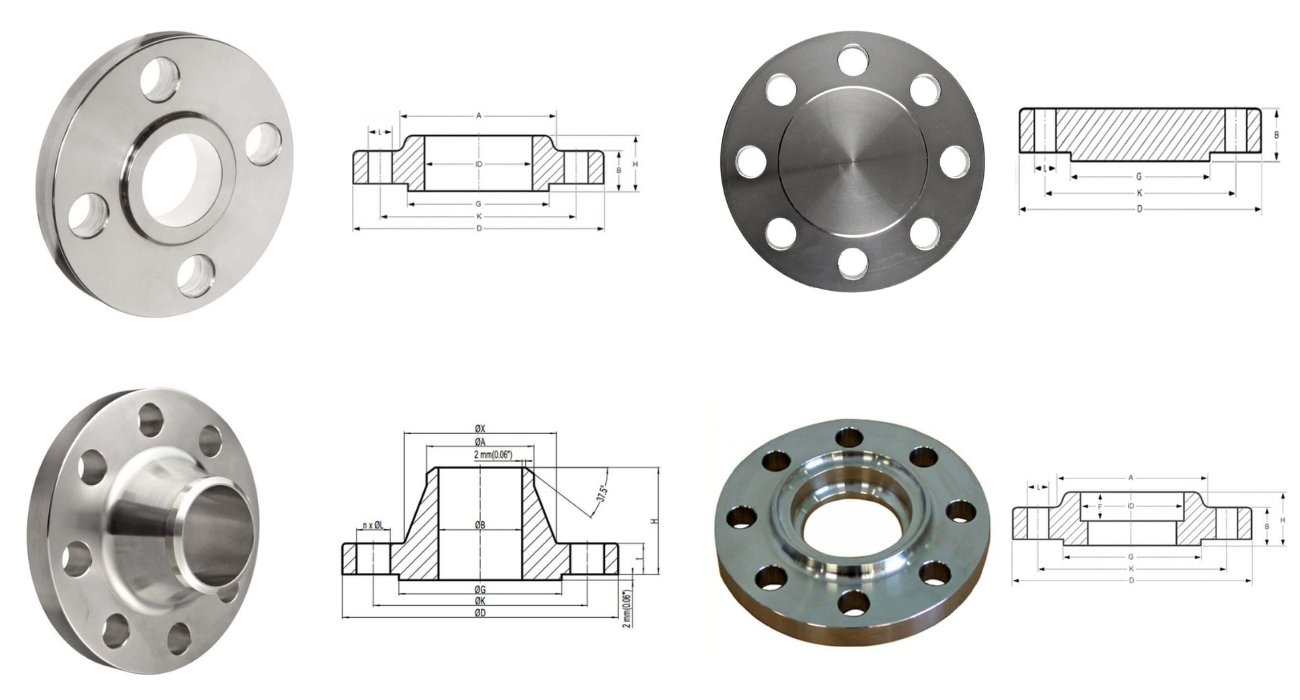
Flanges play a critical role in piping systems across industries such as oil & gas, chemical processing, power generation, water treatment, and manufacturing. They provide a secure and detachable way to connect pipes, valves, pumps, and other equipment, making maintenance and inspection easier.
With so many flange types available, selecting the right one for your application can be confusing. Each type is designed to handle specific pressure levels, temperatures, and operating conditions. This guide explores the most commonly used types of flanges, their features, advantages, and typical applications to help you make an informed decision.
What Is a Flange?
A flange is a flat or raised rim used to connect pipes, fittings, or equipment using bolts and gaskets. The flange joint creates a leak-proof seal while allowing easy disassembly when required. Flanges are manufactured in various materials, sizes, pressure classes, and facing types to suit different industrial needs.
Common Types of Flanges Used in Piping Systems
1. Weld Neck Flange
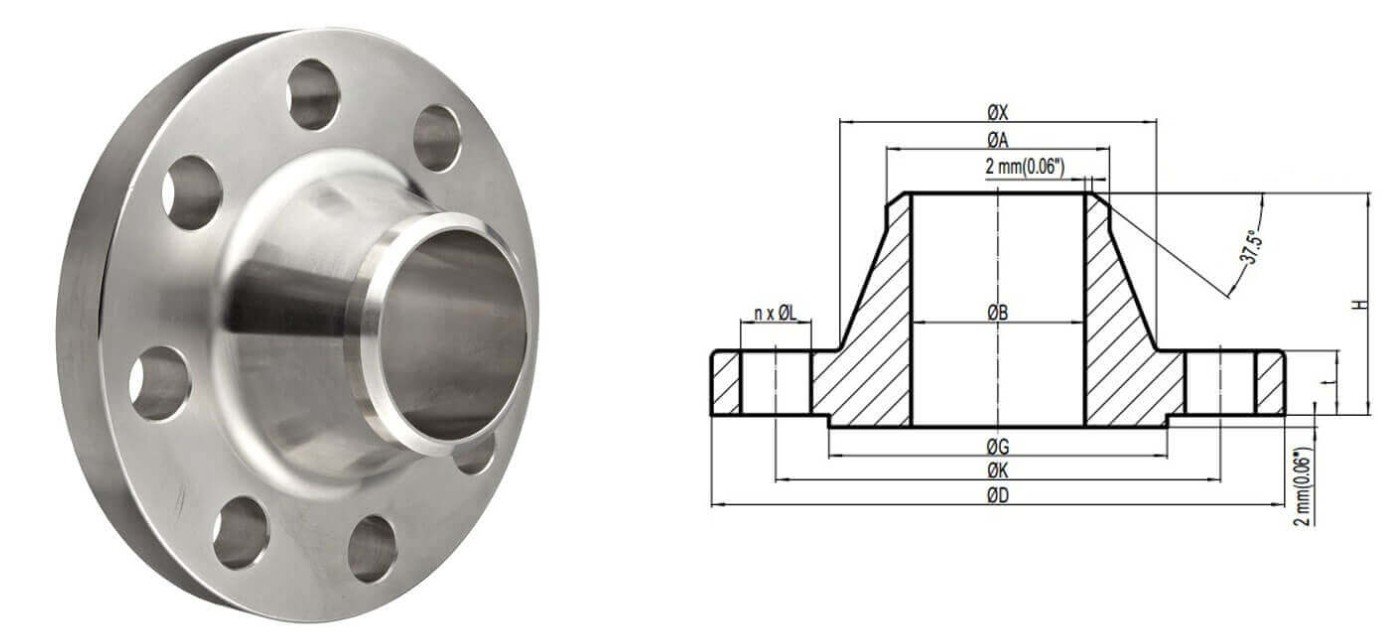
Weld neck flanges are one of the most widely used flange types in high-pressure and high-temperature applications. They feature a long tapered hub that is welded directly to the pipe, providing excellent stress distribution.
Key Features:
- Strong and durable connection
- Ideal for severe service conditions
- Reduces turbulence and erosion
Common Applications:
- Oil & gas pipelines
- Refineries and petrochemical plants
- Power generation systems
2. Slip-On Flange
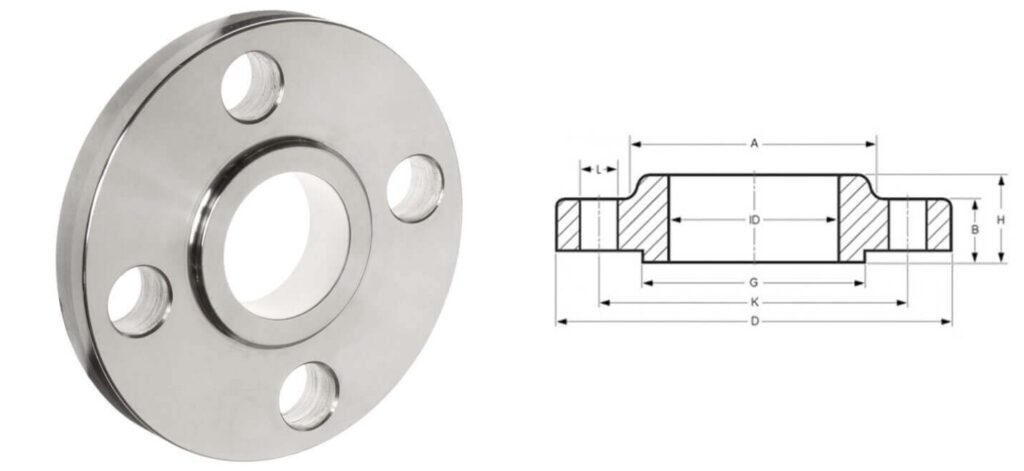
Slip-on flanges are designed to slide over the pipe and are welded from both the inside and outside. They are easier to align during installation, making them a cost-effective option for low-pressure systems.
Key Features:
- Simple installation
- Lower cost than weld neck flanges
- Suitable for low to moderate pressure
Common Applications:
- Water pipelines
- Fire protection systems
- Low-pressure industrial services
3. Blind Flange
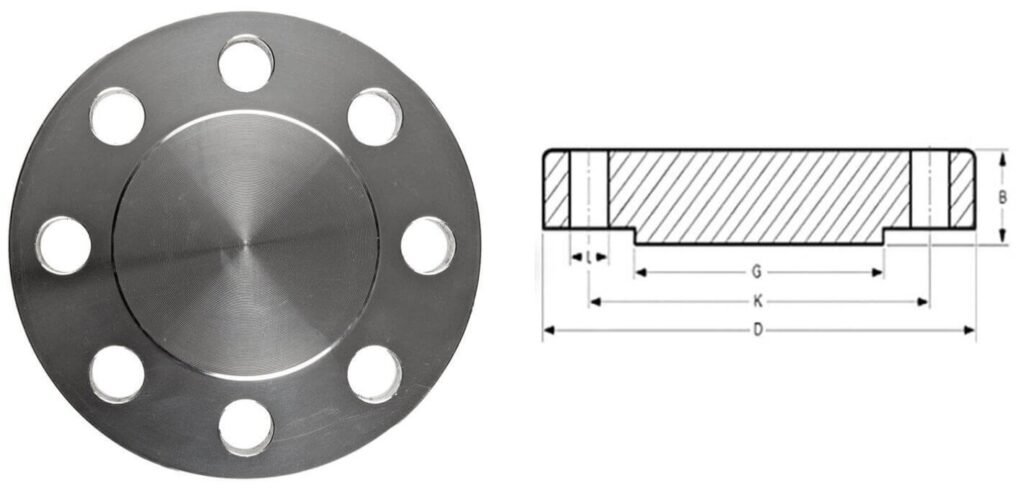
Blind flanges are solid flanges without a central bore. They are used to close the end of a pipeline or vessel, allowing future expansion or inspection access.
Key Features:
- Provides complete closure
- Easy to remove for maintenance
- High strength under pressure
Common Applications:
- Pressure testing lines
- Pipeline termination points
- Chemical and oil processing units
4. Socket Weld Flange
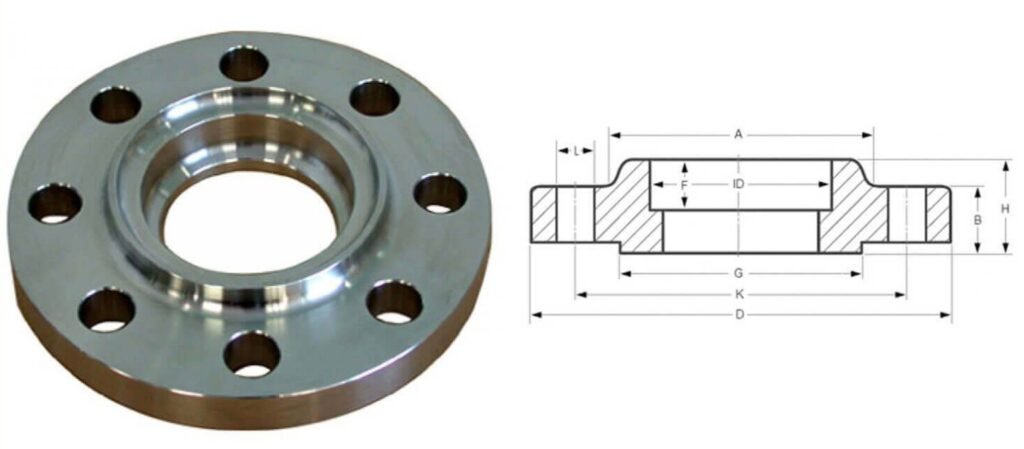
Socket weld flanges have a recessed area where the pipe is inserted before welding. These flanges are commonly used for small-diameter, high-pressure piping systems.
Key Features:
- Smooth bore for better flow
- Strong and leak-resistant joint
- Suitable for small pipe sizes
Common Applications:
- Hydraulic systems
- Steam lines
- High-pressure fluid services
5. Lap Joint Flange
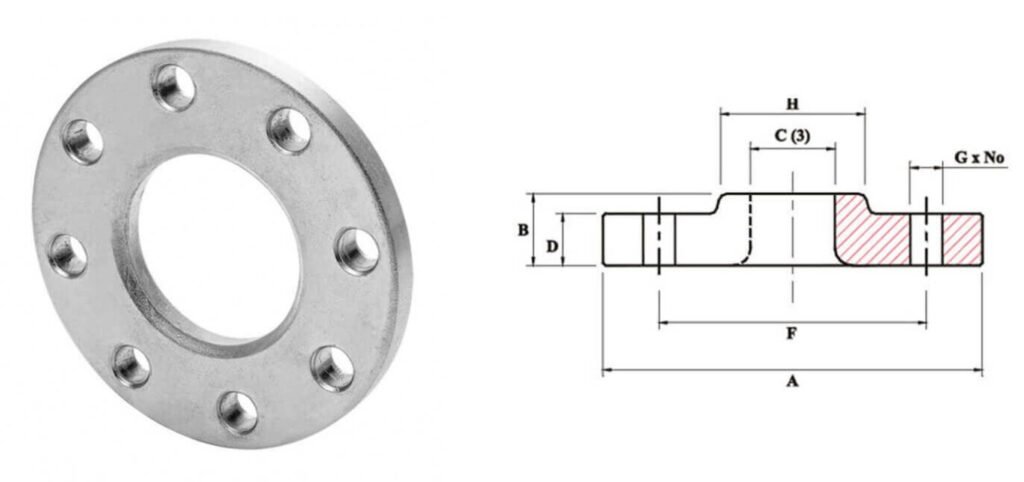
Lap joint flanges are used with a stub end and allow the flange to rotate freely around the pipe. This makes alignment easier, especially in systems that require frequent dismantling.
Key Features:
- Easy bolt alignment
- Cost-effective for expensive materials
- Ideal for frequent maintenance
Common Applications:
- Chemical processing plants
- Food and pharmaceutical industries
- Non-corrosive or low-pressure systems
6. Threaded Flange
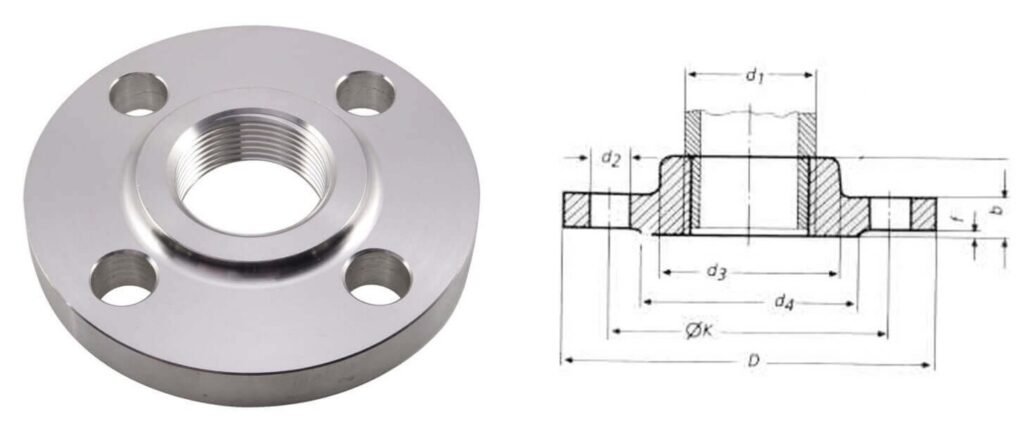
Threaded flanges connect to pipes using threads instead of welding. They are ideal where welding is not feasible or permitted.
Key Features:
- No welding required
- Easy installation and removal
- Suitable for low-pressure applications
Common Applications:
- Utility pipelines
- Fuel and water lines
- Hazardous areas where welding is restricted
7. Long Weld Neck Flange
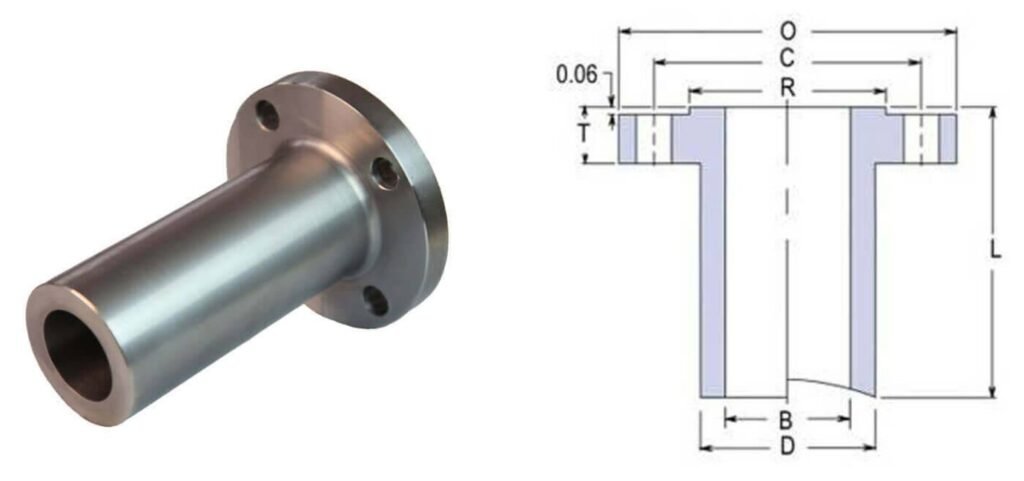
Long weld neck flanges are similar to weld neck flanges but with an extended neck. They are often used where the flange also functions as a nozzle or structural extension.
Key Features:
- Excellent load distribution
- High strength
- Customizable length
Common Applications:
- Pressure vessels
- Heat exchangers
- Offshore and heavy industrial equipment
8. Orifice Flange
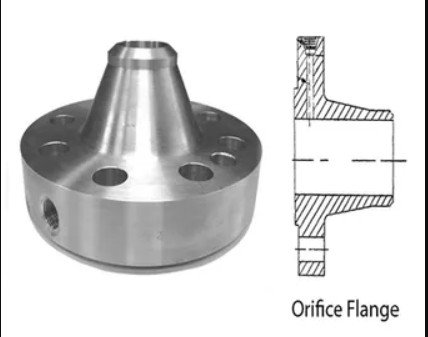
Orifice flanges are specially designed to measure flow rates in pipelines. They come in pairs and include pressure tap holes.
Key Features:
- Accurate flow measurement
- Easy installation and removal
- Designed for instrumentation use
Common Applications:
- Flow monitoring systems
- Oil & gas pipelines
- Chemical processing plants
9. Reducing Flange
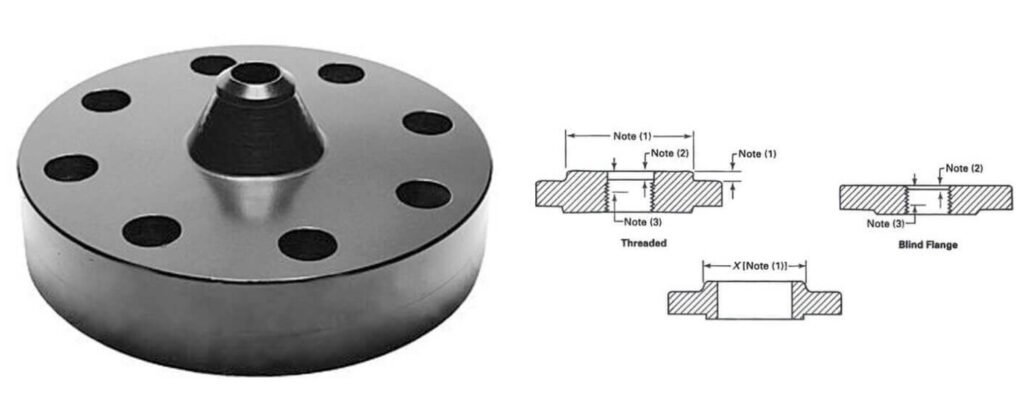
Reducing flanges are used when the pipe diameter changes within a piping system. They eliminate the need for reducers in certain layouts.
Key Features:
- Space-saving design
- Smooth flow transition
- Reduced installation cost
Common Applications:
- Compact piping systems
- Process pipelines
- Industrial plants with limited space
How to Choose the Right Flange Type
Selecting the correct flange depends on several factors:
- Operating pressure and temperature
- Pipe size and material
- Type of fluid being transported
- Installation and maintenance requirements
- Industry standards and specifications
Understanding these parameters ensures long-term performance, safety, and cost efficiency.
Final Thoughts
Flanges may appear to be simple components, but choosing the wrong type can lead to leaks, downtime, and safety risks. Each flange type serves a specific purpose, and understanding their differences helps in designing reliable piping systems.
Whether you are working on a low-pressure utility line or a high-temperature industrial pipeline, selecting the right flange ensures strength, durability, and smooth operation for years to come.